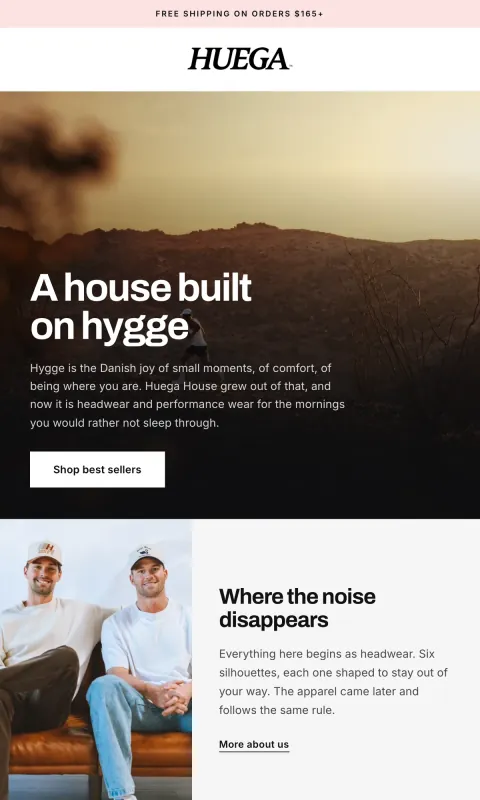
9 welcome emails R10N designed for real brands, and what each one does. The pattern that works: say who you are in a line or two, deliver what the signup form promised, show a few real products, and ask for one thing.
Your first three designs are free until November 27. No card.
What a good welcome email does
It keeps the promise the signup form made, introduces the brand in its own voice, and gives a new subscriber one easy next step. It is usually the email a new subscriber opens most, so it is worth designing properly rather than leaving the platform’s default in place.
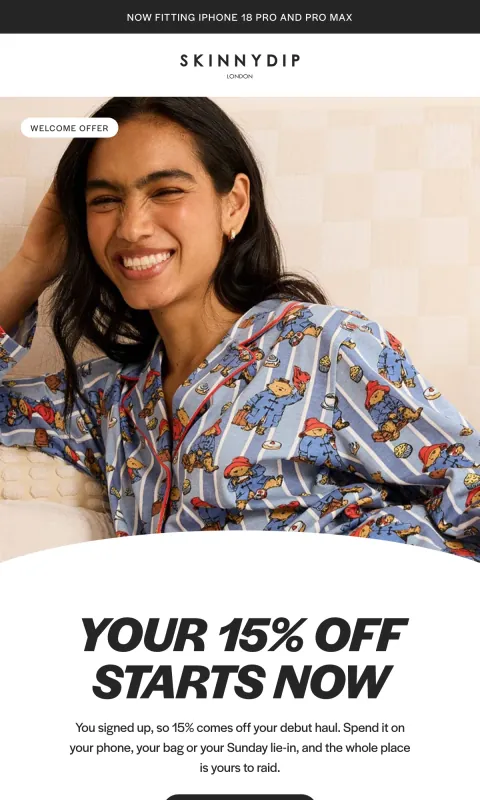
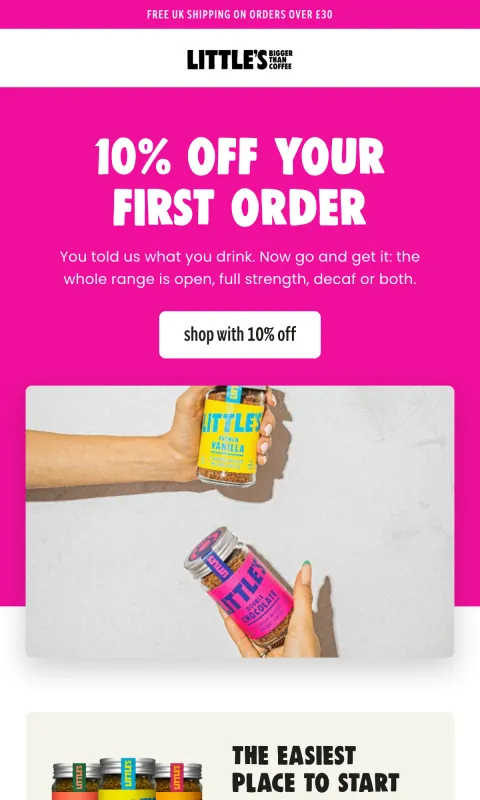
Deliver the promise in the headline. If the form said 15% off, the email says it first. Skinnydip London’s welcome leads with “Your 15% off starts now”; Little’s Coffee puts 10% off the first order above everything else.
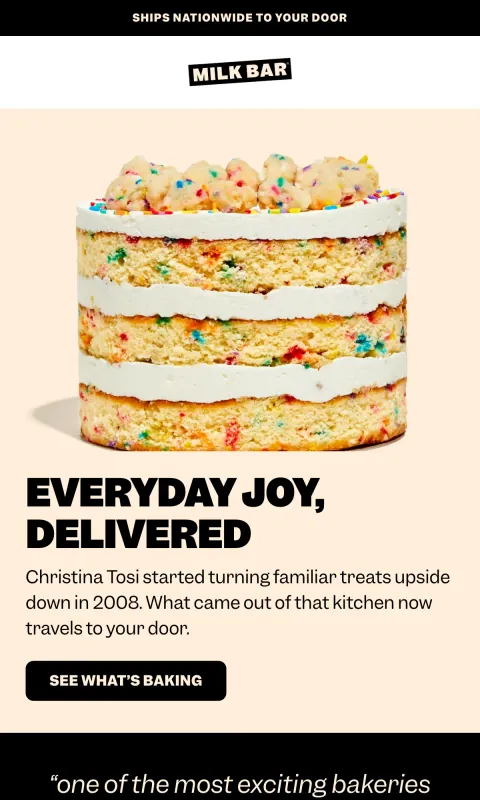
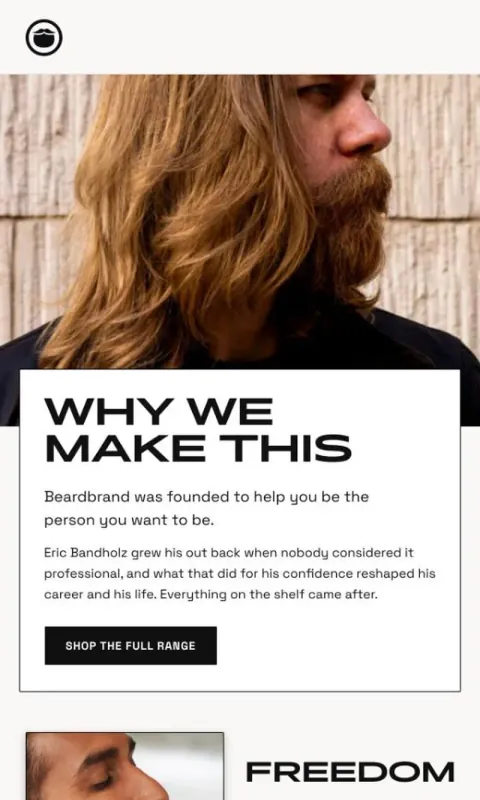
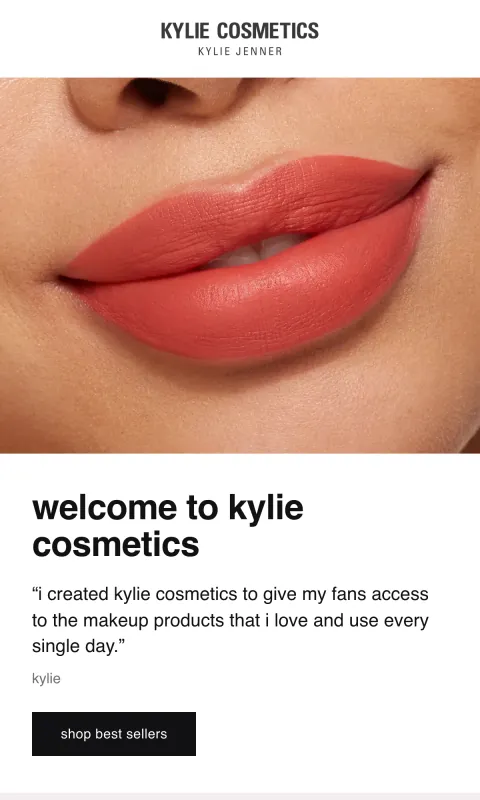
Tell the story in two sentences, not ten. Milk Bar names Christina Tosi and 2008 and moves on. Beardbrand explains why it was founded. Bloom Nutrition starts from the founder’s own reason.
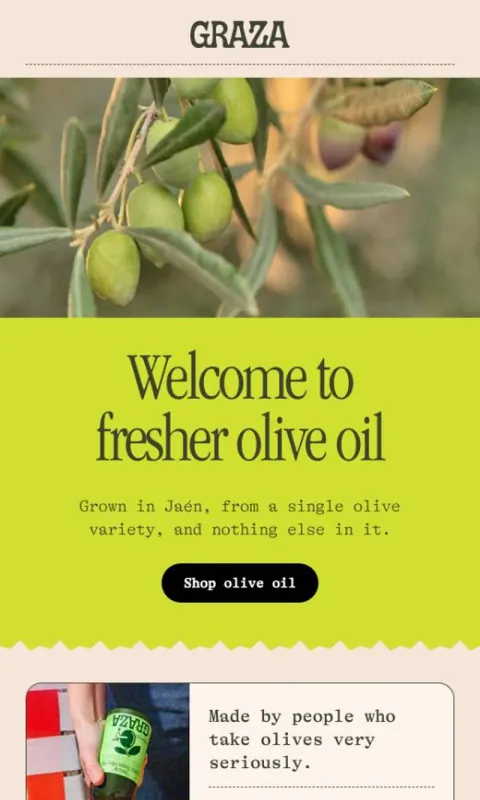
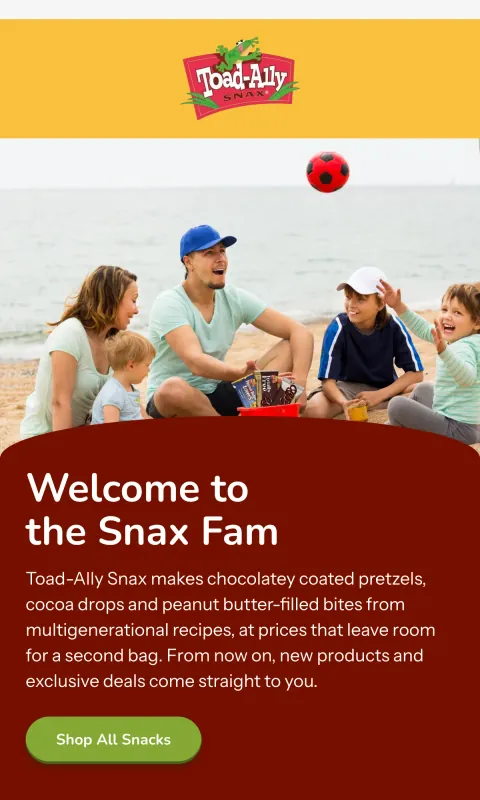
Show real products. Graza’s welcome opens on the bottles and one plain fact about the oil; Toad-ally Snax names what it makes before anything else.
Say what happens next. “From now on, new products and exclusive deals come straight to you” tells a subscriber why to keep opening.
One button. Shop the range, or shop the offer. A welcome with five calls to action has none.
Welcome emails R10N designed
Each was made from the brand's public website and a one-line brief. Open one to read it at full length.
Concept designs generated by R10N from each brand’s public website. Not affiliated with or endorsed by the brands shown. To request removal, email hello@r10n.app.
Make one for your brand
R10N reads your website first, so your welcome email starts in your colors, type and voice, with your own products. Describe the email in a sentence:
A welcome email for new subscribers. Two lines on who we are and why we started, our three best sellers with prices, and the 10% off code from the signup form.
Then change anything by asking, and send it to Klaviyo, Omnisend or Mailchimp as a template for your welcome flow. The Klaviyo guide walks through that step, and How to prompt R10N covers what to put in the sentence.
Questions
What should a welcome email include?
Who you are in a line or two, whatever the signup form promised (a code, a guide, early access), a few of your real products, and one button. Anything past that can wait for the second email.
When should a welcome email be sent?
Straight after someone signs up, while they still remember doing it. The second email in a series usually follows a day or two later.
Does a welcome email need a discount?
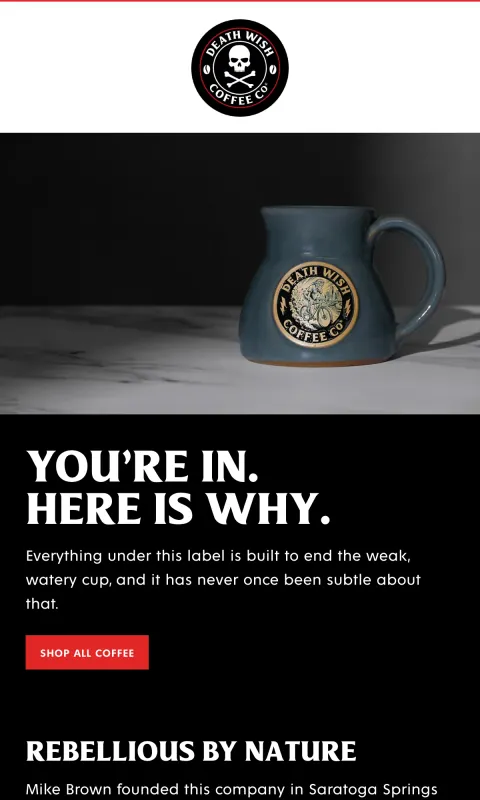
Only if the signup form promised one. Several of the examples here (Milk Bar, Beardbrand, Death Wish Coffee) welcome people with the brand's story and no discount at all. If you did promise an offer, put it in the headline so the open delivers it.
How many emails should a welcome series have?
Two to four is common for a DTC brand: the welcome itself, then best sellers or reviews, then a reminder if the offer has not been used. Each one should have a single job.
Can I use an R10N welcome email in my Klaviyo welcome flow?
Yes. Design it in R10N, save it as a template in Klaviyo, and choose that template in the flow's email step. Omnisend and Mailchimp work the same way.